The first is a village. I spent my childhood there, until the third grade. I don't remember much of it now, but I can still feel the freedom I had.
I remember the smell in the air when the first rain finally fell after a long, hot summer day. I remember climbing up to the roof on summer nights to sleep under the open sky, watching the stars and galaxies until we dozed off. I remember climbing the mango tree to pluck raw, green kaccha mangoes, then sitting on the same branch and eating them with a pinch of salt.
There was a serenity to all of it. Whether that came from the village itself, or simply from being a child with no responsibilities, I still can't say.
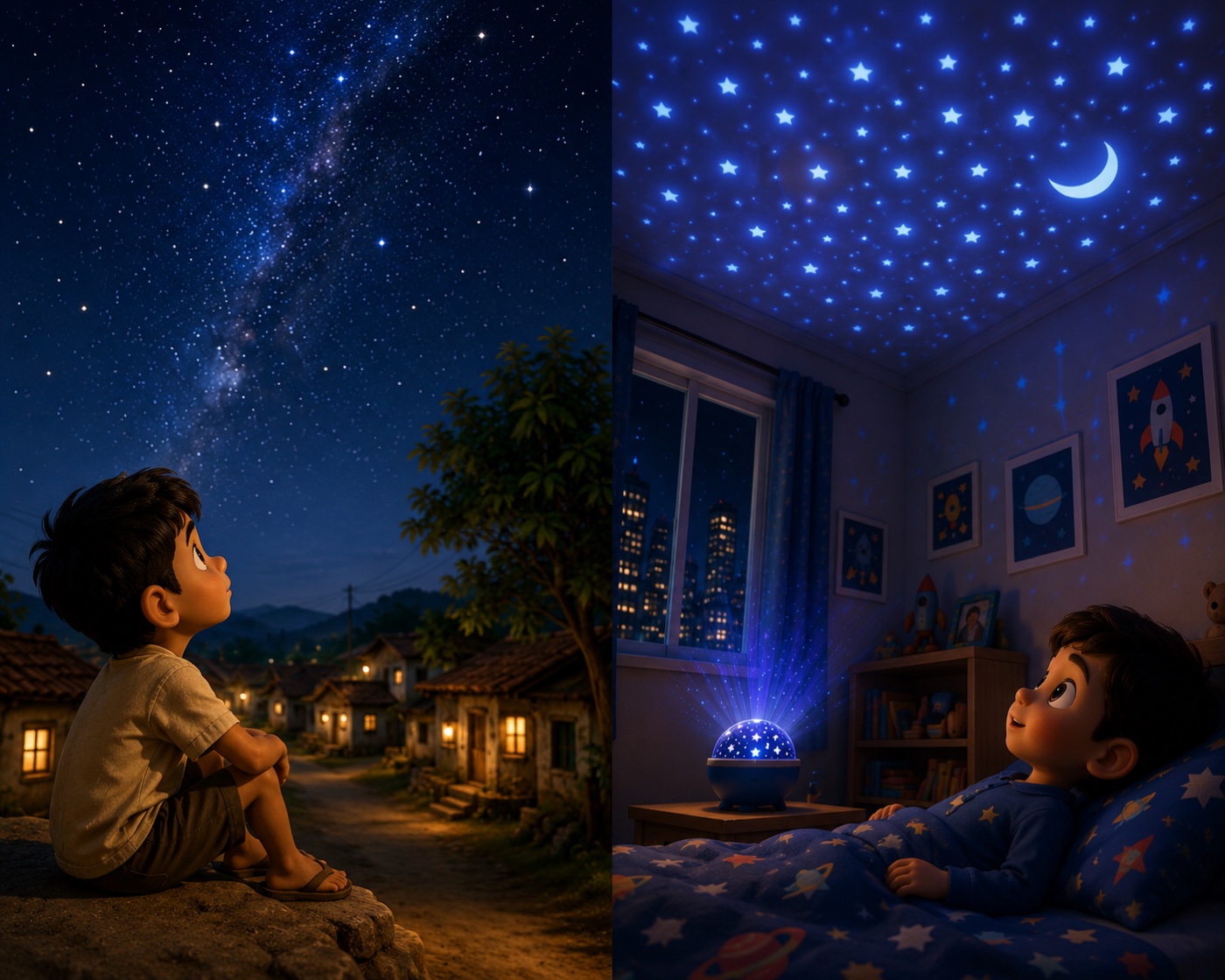
The second India is where my professional life began. I became financially independent. For the first time I didn't have to ask my father for money, and that felt like freedom.
The freedom didn't last. Instead of asking my father for money, I now ask clients for requirements. Instead of climbing trees, I climb stairs: to cross the road, to reach another floor, to get one more rung up the corporate ladder. It's a race, and there's no finish line.
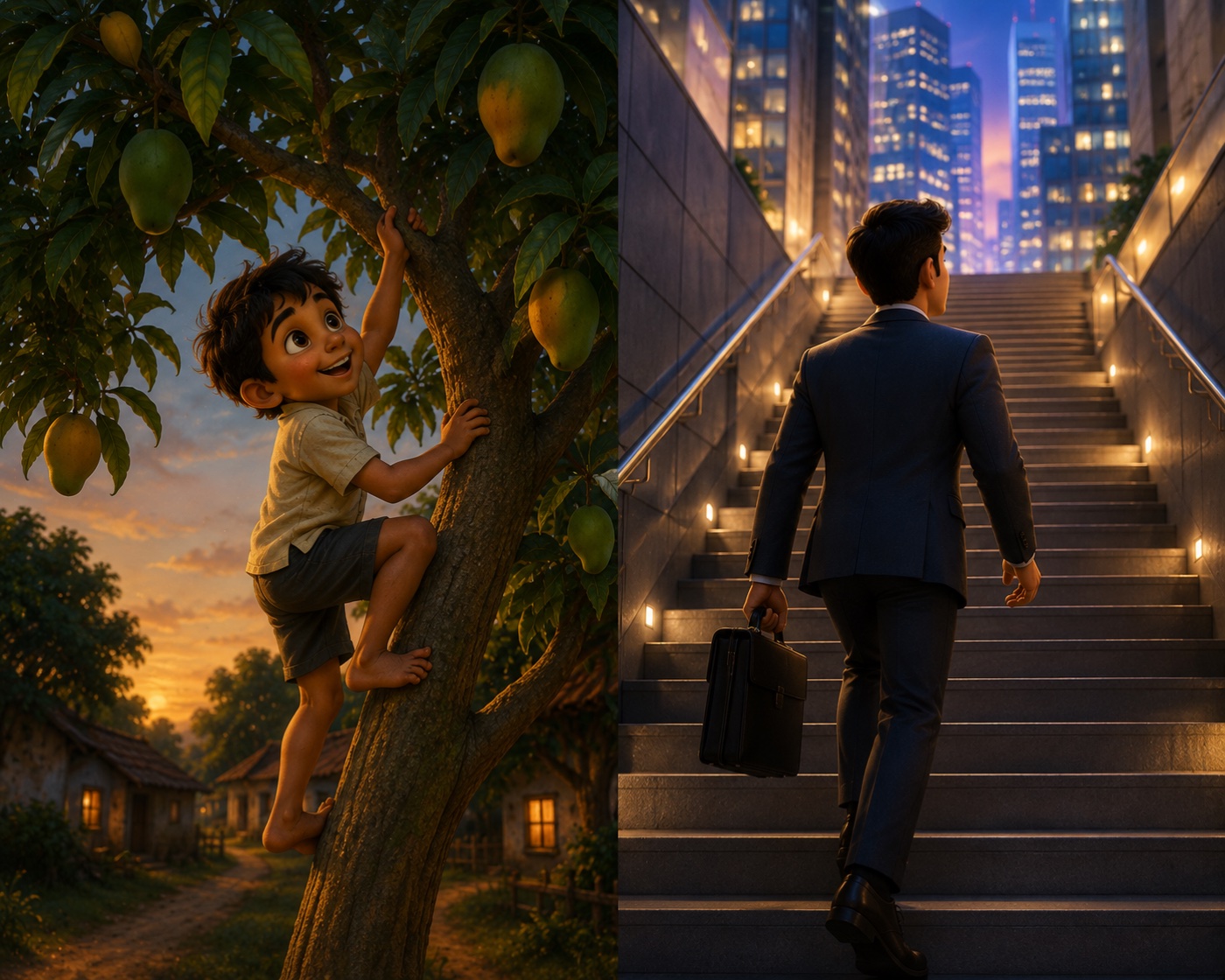
It's been months since I last sat under an open sky and just looked at the stars for a while. And honestly, even if I tried, the pollution means most nights there's nothing left up there to see.
My wife was born and raised in a metro city. Her idea of a village comes from tourist places like Shimla, Manali, and Varkala. They're beautiful, but they aren't the real thing. That's a postcard. The village I grew up in doesn't fit on a postcard.
Sometimes I wonder which of these is the real India, and which one is the real me. Maybe both are. Maybe I'm still that boy on the mango tree, just wearing an ID card now and taking the stairs.
I don't have a neat ending for this. I only know that the first India gave me something the second one keeps promising but never quite delivers. And on the rare clear night, when I can actually make out a star or two, some part of me still wants to go up to the roof.
Comments